
Building a Resilient Supply Chain for Complex IVD Reagents (or Proteins)
Moving beyond traditional systems for difficult-to-express diagnostic proteins.
🕑 5 Minute Read
Introduction
In the world of in vitro diagnostics (IVD), recent global market disruptions make one truth clear: a diagnostic test is only as reliable as its underlying supply chain. When critical antigens suffer from supply shortages, lot-to-lot inconsistencies, or scale-up hurdles, the consequences go beyond manufacturing delays to increased cost of goods and compromised patient care.
As demand for advanced diagnostics expands across point-of-care testing, disease detection, and personalized medicine, manufacturers face mounting pressure to secure high-quality assay proteins that scale reliably.1,2 For those working with complex or specialized antigens or enzymes, traditional biological sourcing puts commercial timelines at risk and remains a significant challenge.
In order to build a more resilient supply chain, assay developers must rethink how critical protein reagents are produced and move beyond native biological sources towards scalable recombinant expression platforms.
Not All Proteins Scale Alike: The Antigen and Enzyme Bottleneck
Native antigens are harvested directly from biological sources, such as human or animal tissues and whole pathogens to preserve structural conformations and post-translational modifications (PTMs). However, variable extraction yields and unpredictable donor availability introduces supply chain risks, driving manufacturers toward recombinant alternatives to ensure long-term commercial stability.
While in vitro diagnostics rely on three primary protein classes–antibodies, antigens, and enzymes–not all three are produced successfully and at high yields in conventional biomanufacturing systems. E. coli is a common host used for the expression of simple proteins, but can struggle with complex antigens and enzymes that require precise folding, multi-subunit assembly, and PTMs. For these proteins, mammalian cells (CHO/HEK) are commonly used but bring along a much higher cost and scalability risk. As a result, IVD assay developers using complex proteins can frequently face low functional yields and production bottlenecks. It is clear that traditional recombinant platforms are not able to meet all the protein needs of IVD assay developers.
Why Traditional Expression Systems Can Fall Short
Traditional recombinant systems like Escherichia coli (E. coli) and Chinese hamster ovary (CHO) cells serve key roles in biomanufacturing, but these systems do not always meet the needs required for complex diagnostic proteins:
- Misfolding and Inclusion Bodies: While E. coli can produce high protein yields for simple targets, complex proteins can accumulate as insoluble inclusion bodies, requiring additional solubilization and refolding steps to recover functional protein. By adding more downstream processing in the manufacturing process, batch-to-batch risks are introduced including yield and volatility in manufacturing timelines.3
- Assay-Specific Contaminants: The choice of expression host can affect downstream processes. For example, bacterial host-derived impurities may be problematic in assays sensitive to bacterial components, while mammalian expression systems may introduce host substances that interfere with certain measurements.4
- Host-Cell Toxicity: Some proteins can interfere with host-cell viability or normal cellular processes. This can limit production yields substantially, complicating scale-up and potentially making an assay infeasible.5
- Scale-Up Re-Optimization: Scaling up is rarely an identical process to small-scale production. For mammalian cell culture, changes in bioreactor dynamics can alter yields and protein quality. This results in necessary, meticulous re-optimization when scaling up to larger volumes, increasing cost and adding more risk to commercial timelines.
Rethinking Biomanufacturing for Difficult-to-Express Targets
To protect against supply chain volatility, diagnostic developers require an expression platform engineered specifically for hard-to-express proteins–particularly, systems that do not require extensive process re-optimization when changing the expression scale from pilot to commercial.
The EntoEngine® platform offers a flexible alternative to traditional biomanufacturing. By leveraging Drosophila melanogaster (whole transgenic fruit flies) as a multicellular host, the platform resolves conventional expression bottlenecks by delivering:
Native-like folding and
PTM preservation
for eukayotic proteins
High yields for
complex proteins
via inducible expression

Batch-to-batch
consistency
across production runs
Zero scale-up delay
as the process remains identical
from microgram to gram scale
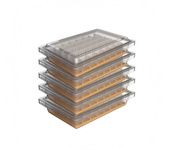
Rather than relying on conventional fermenters and bioreactors that require extensive scale-up re-optimization, the EntoEngine® uses modular insect farming for seamless volume expansion. This approach provides low-risk flexibility across production stages, addressing microgram-scale feasibility needs to multi-gram commercial batches without process re-optimization.
With the aim to support production of difficult-to-produce proteins at lower costs without sacrificing quality or timelines, the EntoEngine® platform can help IVD assay developers resolve critical production issues that prevent progress in feasibility studies, reduce dependence on constrained sourcing routes, and secure a resilient supply strategy for complex proteins.
To protect against supply chain volatility, diagnostic developers require an expression platform engineered specifically for hard-to-express proteins–particularly, systems that do not require extensive process re-optimization when changing the expression scale from pilot to commercial.
A Resilient Supply Chain Built for Diagnostics
Building a reliable antigen supply is foundational to the long-term success of many diagnostic products. While native antigens remain important for applications requiring specific natural protein characteristics, recombinant systems offer opportunities to control production and improve reliability. The most important consideration is to select an expression platform suited for the biological and functional requirements of each unique protein.
For difficult-to-express diagnostic antigens and enzymes, the EntoEngine® provides an alternative to conventional production systems and offers a new way to achieve scalable, high-quality protein supply for IVD applications.
Looking to overcome expression and supply constraints for critical assay proteins?
Download the tech brief to learn how EntoEngine® can support your IVD assay development and manufacturing needs.
Sources
- Research and Markets, “In-Vitro Diagnostics (IVD) Reagents Market Research 2025–2030: Innovation and Intensified Competition Drive Growth Amid Rising Demand for Early Diagnosis and Personalized Medicine,” GlobeNewswire, June 17, 2025, https://www.globenewswire.com/news-release/2025/06/17/3100475/28124/en/In-vitro-Diagnostics-IVD-Reagents-Market-Research-2025-2030-Innovation-and-Intensified-Competition-Drive-Growth-Amid-Rising-Demand-for-Early-Diagnosis-and-Personalized-Medicine.html.
- Qiya Gao and Shuang Li, “Intelligent Point-of-Care Testing for Medicine Diagnosis,” Interdisciplinary Medicine 2, no. 1 (2024): e20230031, https://doi.org/10.1002/inmd.20230031.
- Raquel Cid and Jorge Bolívar, “Platforms for Production of Protein-Based Vaccines: From Classical to Next-Generation Strategies,” Biomolecules 11, no. 8 (2021): 1072, https://doi.org/10.3390/biom11081072.
- Nagesh K. Tripathi and Ambuj Shrivastava, “Recent Developments in Bioprocessing of Recombinant Proteins: Expression Hosts and Process Development,” Frontiers in Bioengineering and Biotechnology 7 (2019): 420, https://doi.org/10.3389/fbioe.2019.00420.
- Germán L. Rosano and Eduardo A. Ceccarelli, “Recombinant Protein Expression in Escherichia coli: Advances and Challenges,” Frontiers in Microbiology 5 (2014): 172, https://doi.org/10.3389/fmicb.2014.00172.
More from Future Fields
